

Mica Meaning and Properties

Mica History
Mica is a natural stone with a vitreous to pearly luster, which forms in multiple distinct layers. Mica is actually a broad term that is attributed to more than 34 types of these layers. The most common form of mica is called muscovite, while other varieties include anandite, fuchsite and lepidolite. While mica has been found in various places around the world throughout history, it wasn't until the 19th century that the gem was given its name and mined for export. This stone is often ground up and used as a shimmering powder accent in jewelry and accessories, but mica is also used in makeup foundations and cement filler and as an insulator in electrical cables.
What are the Metaphysical Properties of Mica?
No doubt in part due to its shimmering, reflective properties, mica meaning is associated with helping individuals reflect on individual qualities. Mica is thought to help us recognize flaws without self-condemnation so we are able to effectively address negative personality traits. (After all, you can't change what you don't see.) According to metaphysical beliefs, mica is also used to reduce hostile or nervous energy. The gemstone mica is not a traditional birthstone but is most closely associated with the zodiac signs Aquarius and Virgo. Some say mica meaning is also connected to the heart chakra, while others believe that the pigment of the stone affects which chakra mica influences.
What is Mica Made From?
Mica is a type of silicate formed as paper-thin layers built upon each other in formations that include flat angular blades, rosettes or hexagonal columns. Mica is a metallic material since it contains reactive element metals like potassium, lithium and aluminium. For this reason, mica can feel cold to the touch. The gem mica is predominantly found in Brazil, Russia, Africa, India and Pakistan.
- Mineral Information: Silicate
- Chemical Composition: KAl2(AlSi3O10)(F,OH)2
- Color: Brown, colorless, gray, green, red, violet, white, yellow
- Hardness: 2-1/2 (Mohs)
- Specific Gravity: 2.8 – 3.0
How Do You Clean Mica?
Mica is a delicate stone with a Mohs hardness of only 2-1/2. It's easily scratched or carved and can be turned into a powdery substance. Often beads and supplies made of mica are coated to protect the stone from wear and tear. To clean these materials, use a soft cloth free of impregnations. Do not use harsh cleaners or steam to clean mica and avoid wearing this stone while cleaning with bleach.
Mica FAQs
Q: Is mica considered a gemstone or a mineral?
A: Due to its fragility, most mica is considered a mineral rather than a gemstone.
Q: Why does mica sparkle?
A: Because of its many extremely thin translucent layers, light is reflected and refracted in many places and at many levels, producing a sparkling effect.
Q: What other industries use mica besides jewelry?
A: There are a variety of uses for mica other than jewelry applications. It is used in both makeup and food to add sparkle. It’s used in paint, drywall and joint compound. It’s used in roofing, wallpaper, concrete, stucco, welding and electronics as well, as it is an insulator.
Q: Is mica an expensive gemstone?
A: Mica exists in abundance and is generally considered a low- to medium-priced gemstone.
Designing with Mica
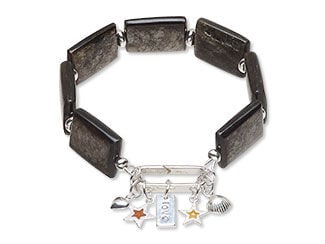
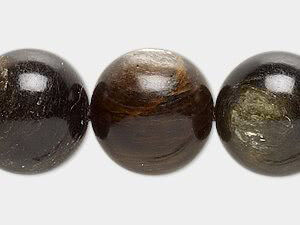
In jewelry-making, mica is most commonly found as a powder. This powder is used for creating colorful accents on polymer clay, resins and more. It is recommended to apply a clear top coat to prevent the pigment from wearing off over time. Natural mica can also be found as sheets that are sometimes used as a substitute for glass sheet, offering a vintage air to jewelry and décor designs since they give a slight sepia tone to materials they are placed on. Mica sheets can be easily ink-stamped, drilled, riveted and cut with scissors. Coated mica beads are sometimes mistaken for pyrite since they have an iridescent sheen over a dark grey-gold background. These tones are ideal for men's, women's and unisex jewelry designs. It is recommended to use mica sheet or beads in jewelry such as pendants and earrings rather than bracelets or other jewelry that can accidently receive impact such as from a countertop.
A Design Inspiration to Get You Started
Shop for Mica
**Please note that all metaphysical or healing properties listed are collected from various sources. This information is offered as a service and not meant to treat medical conditions. Fire Mountain Gems and Beads® does not guarantee the validity of any of these statements.
How did you like this resource? Your feedback helps us provide resources that matter to you most.
All works of authorship (articles, videos, tutorials and other creative works) are from the Fire Mountain Gems and Beads® Collection, and permission to copy is granted for non-commercial educational purposes only. All other reproduction requires written permission. For more information, please email copyrightpermission@firemtn.com.