Morganite Meaning and Properties

Morganite History
This transparent peachy stone was originally discovered in California and Madagascar during the 1900s. Originally referred to as pink beryl, morganite was renamed in 1911 at the suggestion of George F. Kunz, chief gemologist of Tiffany and Co. The stone was named in honor of J.P. Morgan, a financier and gem collector who provided significant mineral contributions to the American Museum of Natural History in New York. It also helped that Morgan was a loyal Tiffany and Co. customer, where most morganite was sold at the time.
What are the Metaphysical Properties Of Morganite?
With its soft pinkish hue, morganite meaning is often associated with innocence, sweetness, romance and love. In general, morganite is connected to the heart and is attuned to the heart chakra. Morganite is believed to bring healing, compassion and promise to those who wear it. Morganite is said to open wearers to unconditional love while dissolving ego. Though not an actual birthstone, morganite is said to be an excellent stone for the zodiac signs of Pisces, Taurus and Cancer.
What is Morganite Made From?
As a beryl, morganite is transparent and has a vitreous luster. This stone is relatively free of inclusions, giving it a desirable clear appearance. Morganite is essentially colorless, but the presence of magnesium creates a pink effect, while the presence of iron impurities gives a slight yellow or orange hue, combining for the iconic peachy color. Morganite is dichroic, meaning it can appear to be different colors or shades depending on the angle the stone is viewed at due to the way light is absorbed through the stone. In rare cases, morganite gemstones can display chatoyancy (cat’s-eye effect) or asterism (exhibiting a star-like effect).
Morganite is commonly found as an "accessory mineral," meaning this gemstone grows in small quantities in the presence of other minerals, which makes it fairly rare. Usually found in cavities and granite pegmatites, morganite formations are short and tabular in structure. While a rare stone, morganite is found in many locations around the world, including large deposits in Brazil and Madagascar as well as Afghanistan, China, Madagascar, Mozambique, Namibia, Russia, Zimbabwe and the USA.
- Mineral Information: Beryllium aluminum silicate
- Chemical Composition: Be3Al2(SiO3)6
- Color: Pink, salmon pink, purple-pink
- Hardness: 7-1/2 (Mohs)
- Specific Gravity: 2.8 - 2.91
- Refractive Index: 1.583 - 1.59
How Do You Clean Morganite?
Though morganite is a resilient stone with a Mohs hardness of 7-1/2, gentle cleaning methods are still the best. Easily clean morganite gemstones by rinsing in room temperature water with mild soap. Be sure to thoroughly dry the stone and any jewelry settings. An untreated cloth can also be used to restore shine and polish. Since morganite can be affected by high heat, it's best to not use steaming or boiling methods. It's also a good idea to not store morganite in prolonged heat or direct sunlight. To avoid scratching this clear gemstone, place morganite jewelry in a soft pouch or in its own velveteen tray when not worn.
Morganite FAQ
Q: Is morganite considered rare?
A: Despite its geographic ubiquity, morganite is considered a rare stone.
Q: How durable is morganite?
A: With a Mohs hardness of 7-1/2, morganite is a relatively durable stone, suitable for everyday wear.
Q: Does morganite scratch or chip easily?
A: While morganite is a relatively hard gemstone, care should be taken, as in unusual situations, it can be brittle, causing it to chip.
Q: Can morganite be used in an engagement ring?
A: With its associations of love and romance, morganite is ideal for an engagement or promise ring. To learn more about alternatives for engagement rings, read “Engagement Rings: Personalize with Alternatives to Diamonds.”
Q: Is lab-created morganite available?
A: Lab-created morganite is available, however because the demand for synthetic morganite is low, only a limited amount is produced.
Designing with Morganite
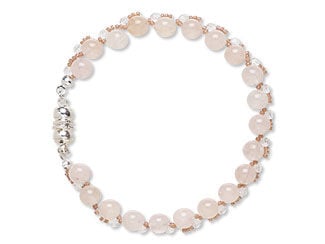
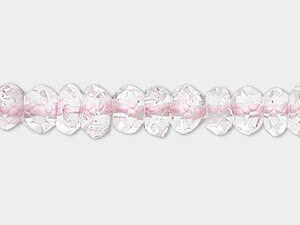
This unique gemstone is a delight to use when designing jewelry. For a monochromatic color palette, combine with other pink-hued materials such as vintage rose crystals or, for varying opacity, powder rose and rosaline crystal pearls. All beryl stones play well together due to their brilliant luster, meaning morganite looks stunning in jewelry designs alongside aquamarine, emerald, goshenite, heliodor and red beryl. In fact, pink looks fantastic with most other colors, infusing designs with a youthful air.
A Design Inspiration to Get You Started
Shop for Morganite
**Please note that all metaphysical or healing properties listed are collected from various sources. This information is offered as a service and not meant to treat medical conditions. Fire Mountain Gems and Beads® does not guarantee the validity of any of these statements.
How did you like this resource? Your feedback helps us provide resources that matter to you most.
Copyright Permissions
All works of authorship (articles, videos, tutorials and other creative works) are from the Fire Mountain Gems and Beads® Collection, and permission to copy is granted for non-commercial educational purposes only. All other reproduction requires written permission. For more information, please email copyrightpermission@firemtn.com.