Pietersite Meaning and Properties

Pietersite History
Pietersite, also called "eagle's eye," was named in honor of Sid Pieters who discovered it in 1962 in Namibia, Africa. Pietersite is a trade name for a dark blue-grey breccia aggregate made up mainly of hawk's eye and tigereye. It is a variety of chalcedony (itself a variety of quartz) with embedded fibers of amphibole minerals in varying degrees of alteration. The fibers cause a blue chatoyancy like that seen in tigereye.
Pietersite is almost always cut into cabochons. This is because, to maximize pietersite's chatoyancy, a tall, round cut is required. It is crucial that the cut must be precisely parallel to the length of the pietersite's fibers.
What are the Metaphysical Properties of Pietersite?
Because its swirling colors resemble a storm, pietersite is also known as tempest stone. Pietersite meaning is said to center on the spiritual being with the ability to ground an individual to the etheric body—the first or lowest layer in the "human energy field" or aura. Pietersite is said to discharge negative energies and emotional turmoil while cleansing the aura, restoring it to calm. Pietersite is thought to work with the body during meditation, rapidly moving into a higher state of awareness. Pietersite is associated with vision and can be used for a vision quest or shaman journey. According to metaphysical beliefs, pietersite promotes a concerted activation of the sacral and solar plexus chakras, as well as the third eye, creating a powerful increase in the energy of will and in one's intuitive capabilities. Pietersite meaning is associated with support, strength and increasing self-esteem.
What is Pietersite Made From?
A member of the quartz family of gemstones, pietersite is a pseudomorph of quartz. A pseudomorph is one mineral that changes into another. Pietersite started as the mineral crocidolite—one of several minerals such as tigereye—which belong to the riebeckite family of amphibole silicates. Over time, quartz gradually replaced the crocidolite fibers. As quartz replaced the crocidolite, it took on the shape of the fibrous mineral, which is what causes the chatoyancy in gemstones of this family. Unlike tigereye, the surface of a pietersite looks rather chaotic, with streaks and colors in every direction. Stones and crystals that go through having their materials swirled and reformed are referred to as brecciated.
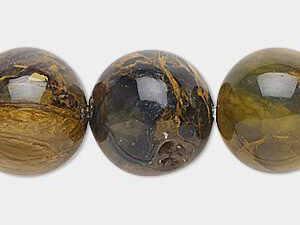
Pietersite can be found in Namibia and in the Henan province of China, although the stones present differently. Pietersite from Namibia is generally blue-grey or golden brown, whereas Chinese pietersite will be reddish-brown to golden are more opaque than the African variety.
- Mineral Information: Silicon dioxide, macrocrystalline quartz
- Chemical Composition: Quartz: SiO2; Crocidolite: Na2Fe4 (OH/Si4O11) (Variable)2
- Color: Brownish-red, orange, golden yellow to brown, blue, gray
- Hardness: 6-1/2 to 7 (Mohs)
- Specific Gravity: 2.50 – 2.74
- Refractive Index: 1.544 – 1.553
How Do You Clean Pietersite?
As a form of quartz, pietersite is remarkably durable and resilient. However, it is sensitive to acids in some common household cleaners and solvents. Avoid bleach, ammonia and sulfuric acid. Ultrasonic and steam cleaners are generally safe for quartzes—even pseudomorph quartzes—although caution should be used with the steamers due to possibilities of color shifts by heating. Warm water and a mild soap are safe to use. A soft cloth is recommended, although quartz's higher hardness does help it resist minor scratching.
Pietersite FAQ
Q: Is pietersite rare?
A: With limited deposits in only two countries worldwide, pietersite is a relatively rare gemstone, with good quality stones having vibrant color and obvious chatoyancy commanding higher interest.
Q: Are pietersite’s patterns natural?
A: Pietersite’s swirling patterns are naturally formed as the different minerals were broken apart and then reformed.
Q: Is pietersite a good stone for a bracelet?
A: With a Mohs hardness for 6-1/2 to 7, pietersite is durable enough for bracelets.
Designing with Pietersite
Earthy brownish-red shades of pietersite are great for men's jewelry. It works well with like-minded gemstones such as chrysanthemum stone, smoky quartz, mocca and smoked topaz crystal beads, brown snowflake jasper and antique copper beads. It also pairs up nicely with nature-inspired colors such as olive "jade" and amber. Pietersite can offer a satisfying contrast to precious metal colors of gold and silver.
Shop for Pietersite
**Please note that all metaphysical or healing properties listed are collected from various sources. This information is offered as a service and not meant to treat medical conditions. Fire Mountain Gems and Beads® does not guarantee the validity of any of these statements.
How did you like this resource? Your feedback helps us provide resources that matter to you most.
Copyright Permissions
All works of authorship (articles, videos, tutorials and other creative works) are from the Fire Mountain Gems and Beads® Collection, and permission to copy is granted for non-commercial educational purposes only. All other reproduction requires written permission. For more information, please email copyrightpermission@firemtn.com.