

Tektite Meaning and Properties

Tektite History
Tektite is not really a gemstone—it's a form of natural glass (much like obsidian) caused by heat. Rather than the heat being from volcanos, however, the heat that makes tektite comes from atmospheric friction. Meteorites enter the planet's atmosphere and are pulled down by gravity. The friction caused by moving through the atmosphere at hundreds of miles per hour builds up heat in the meteorite. When the meteorite impacts, it spends that heat energy (and usually itself) into the local rocks. This causes the rocks to melt and fuse with the remains of the meteorite, creating tektites.
Some legends say that green tektites are emeralds from heaven. Their scarcity makes them valuable; in Europe during the Middle Ages, tektite was used as a good luck talisman, in jewelry and for trade.
What are the Metaphysical Properties of Tektite?
Tektite meaning, due to being a product of extraterrestrial phenomena, is associated with worlds outside our own. They are believed to facilitate communication with otherworldly realms and encourage spiritual growth. In some traditional societies, tektites are worn to promote fertility for both men and women.
Although not a birthstone, tektite meaning is affiliated with the zodiac signs Aries and Cancer. It is often associated with the third eye chakra.
What is Tektite Made From?
Tektites are not gemstones as we usually understand them. Being a product of an extraterrestrial impact into the Earth, tektites are a fascinating blend of terrestrial and extraterrestrial materials. Sometimes, the tektite matrix will be almost entirely extraterrestrial material, resulting in pitting and other textures. Sometimes, it will contain inclusions of minerals or other materials.
One common way to identify tektite is by its excessively low water content. While obsidian froths and expands in heat due to its water content, tektite simply fuses to another piece of glass. Some lampwork artisans have added pendant loops to tektites in this way, removing the need to drill them for use.
Tektites have different names, based on their locations. Most were named before mineralogists and other scientists understood they were all being created the same way and were the same "stone." Pale or bright green ones from southern Bohemia are called moldavite; brown ones from Billiton Island near Borneo are called billitonite; olive green to black ones from Tasmania are called Darwinites or Queenstownites. American tektites include North American paras (Chesapeake Bay), Bediasites (Texas) and Georgiaites (Georgia).
Tektites can be found in Europe, Australia, South Africa, Tasmania, the Philippines and many other locations that have experienced meteorite impacts.
- Mineral Information: Glass, with relicts of other materials
- Chemical Composition: Varies; color can be caused by Fe2+ (for yellowish greens) and Fe3+ (for browns)
- Color: Blacks; yellowish greens to greens to green-blacks; some browns
- Hardness: 0 to 5-1/2 (Mohs)
- Specific Gravity: 2.34 – 2.51
- Refractive Index: 1.490 – 1.520
How Do You Clean Tektite?
Tektite is a glass, which can shatter under heat or vibration, so it is best cleaned with warm, soapy water and a soft cloth. Dirt can be gently removed from any crevices with a soft brush. Do not use toothpaste, as that can scratch the glass surface of the tektite. Keep tektites in padded envelopes or boxes to prevent accidental breakage.
Tektite FAQs
Q: Are tektites considered gemstones or natural glass?
A: Tektites are considered a natural glass, similar to obsidian.
Q: Where in the world are tektites found?
A: Tektites can be found all over the world, wherever there have been meteorite impacts.
Q: Are tektites prone to chipping or scratching?
A: Because tektite is glass, it is prone to chipping and scratching.
Designing with Tektite
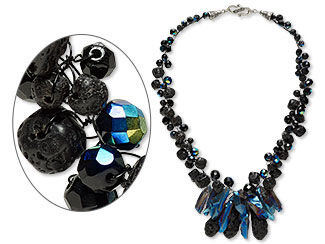
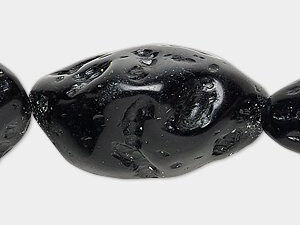
Black is neutral, making it a great design element to combine with many different colored stones, other gemstone beads and all metal tones. The glossy yet rippled-and-pitted surface makes them components of much visual interest. Contrast the glossy finish with matte-finished beads or any type; or the rippled freeform shape with perfectly round beads.
A Design Inspiration to Get You Started
Shop for Tektite
**Please note that all metaphysical or healing properties listed are collected from various sources. This information is offered as a service and not meant to treat medical conditions. Fire Mountain Gems and Beads® does not guarantee the validity of any of these statements.
How did you like this resource? Your feedback helps us provide resources that matter to you most.
All works of authorship (articles, videos, tutorials and other creative works) are from the Fire Mountain Gems and Beads® Collection, and permission to copy is granted for non-commercial educational purposes only. All other reproduction requires written permission. For more information, please email copyrightpermission@firemtn.com.