

Tiger Iron Meaning and Properties

Tiger Iron History
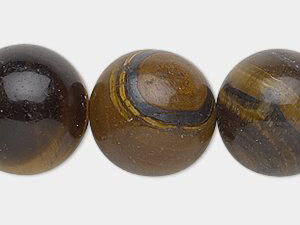
Tiger iron (or tigereye matrix) is a quartz-lignite aggregate gemstone containing layers of vibrant golden tigereye, metallic grey hematite and rich, red jasper.
Tiger iron is also sometimes called mugglestone, to the surprise and delight of Harry Potter fans everywhere! (This unusual term probably comes from "mucklestone," found in a place named "Moclestone" in what is now Great Britain.) This version of tiger iron has little, or low contrast, tigereye bands—which can take some of the (dare we say it?) ... magic ... out of the stone. Some versions of mugglestone are also low on red jasper, making it a highly included, banded form of natural hematite.
What are the Metaphysical Properties of Tiger Iron?
In Feng Shui, the ancient Chinese art of placement, balance comes from the combination of yellow (earth colors) and black/dark brown (water colors). Because yellow is also associated with communication and dark colors with independence—as well as strong self-discipline—tiger iron gives a strong, clear message when worn. That's a big part of tiger iron's purported spiritual power.
Tiger iron meaning is linked to the metaphysical properties of its component stones—the grounding power and circulatory affinity of hematite; the healing power and blood-cleansing abilities of red jasper; the energizing power and clarity inducing strength of tigereye—as well as being considered powerful in its own right. Tiger iron is believed to be a rare and potent three-fold stone; it is thought to ground energies, protect the spirit and manifest the will. As such, practitioners are wary when pairing it with other stones, lest it supercharge them.
Tiger iron meaning is affiliated with the root, sacral and solar plexus chakras. It is assigned to the western astrological signs of Scorpio and Leo and is popular among "earth" signs such as Taurus, Virgo and Capricorn. It can be found among those born in the Year of the Metal Tiger in Chinese astrology (1950 and 2010).
What is Tiger Iron Made From?
There is still scientific uncertainty as to the formation process of tiger iron. Some geologists think this stone is a stromatolite, which includes banded layers of laminated algae fossils from sedimentary deposits. An alternate theory is that tiger iron is a banded iron formation (BIF), formed when the earth was far more oxygen-rich than it is now. Both schools of thought agree, however, that tiger iron is formed in sedimentary deposits.
Deposits of tiger iron are found in Australia, Brazil, Mexico, in the Lake Superior area of the United States and, of course, in the Moclestone area of England.
- Mineral Information: Silicon dioxide (silicates) in combination with red jasper and hematite (oxides and hydroxides)
- Chemical Composition: SiO2 with Fe2O3
- Color: Golden yellow, brick red and metallic grey
- Hardness: 5 to 7 (Mohs)
- Specific Gravity: 2.64 – 2.71
- Refractive Index: 1.544 – 3.220
How Do You Clean Tiger Iron?
While tiger iron is a strong stone, its layered structure means there are weakness built into it. Avoid using ultrasonic or steam cleaners with it. The mix of other gemstone materials means different parts of the stone can have different sensitivities to household cleaners. Use warm soapy water and a soft cotton cloth to wipe down tiger iron and remove any traces of body oils or perspiration.
Tiger Iron FAQs
Q: Are tiger iron beads treated or enhanced?
A: Tiger iron beads are generally natural.
Q: Can tiger iron be exposed to water or sunlight?
A: Sunlight should not affect the beautiful colors in tiger iron. Tiger iron can be exposed to water for brief cleaning, but avoid soaking to protect the stone and keep it looking its best.
Q: Why do patterns vary so much from bead to bead?
A: Tiger iron is a sedimentary stone, with layers being formed over many years. These layers give each stone a beautiful, natural, unique pattern.
Designing with Tiger Iron
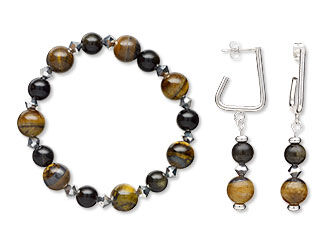
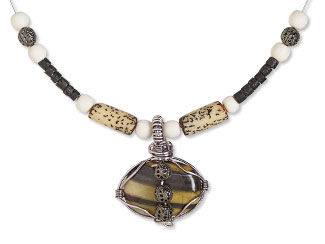
This three-fold stone offers three times the design options! The metallic greys of hematite can be called out in any tiger iron by pairing it with Hemalyke™ beads and components, while the same can be done by adding red or brecciated jasper to highlight the red bands—or golden tigereye beads to accentuate the chatoyant gold layers instead. This flexibility and strong color palette, plus the associations and durability of the three component stones, make tiger iron a great seller in men's and unisex designs, without affecting its popularity in women's jewelry.
While tiger iron is available in smaller bead sizes, larger sizes truly reveal the complex beauty of the stone.
A Few Design Inspirations to Get You Started
Shop for Tiger Iron
**Please note that all metaphysical or healing properties listed are collected from various sources. This information is offered as a service and not meant to treat medical conditions. Fire Mountain Gems and Beads® does not guarantee the validity of any of these statements.
How did you like this resource? Your feedback helps us provide resources that matter to you most.
Copyright Permissions
All works of authorship (articles, videos, tutorials and other creative works) are from the Fire Mountain Gems and Beads® Collection, and permission to copy is granted for non-commercial educational purposes only. All other reproduction requires written permission. For more information, please email copyrightpermission@firemtn.com.