

“Immortelles” - A Guide to French Beaded Flowers
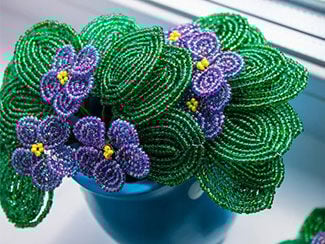
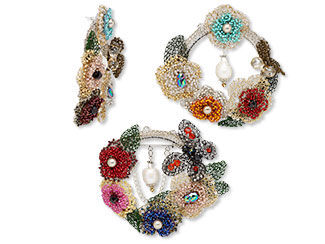
Made with fine metal wire and a range of seed, bugle and other dainty beads, French beaded flowers are an ancient art given new life in the 21st century.
Prompted by the Covid-19 lockdowns, people seeking an outlet started beading up their own blossoms. Instagram and TikTok users began to share techniques, sell patterns or finished designs, suggest beads for specific blossoms and more. Creatives around the world, locked down in small apartments, used sunlight to grow fresh herbs and beaded bouquets of forever flowers to brighten their constrained living spaces.
These days, social media is alive with the art of French beaded flowers. Multiple TikTok videos and Instagram posts with over a million views show the blossoming interest in this vintage art.
French Beaded Flowers - History
This trend is a modern take on a very old art form. Some sources say the art of French beaded flowers began in Germany in the 14th century, while others place the start during the 16th century in France or Italy. Nobody quite agrees when or where the first wire-beaded flowers were created—or who made them.
By the late 19th/early 20th centuries, French beaded flowers were used for weddings and funerals. Ladies’ magazines included patterns and instructions, showing how to make French beaded flowers. Brides making their vows in the winter made their own bridal crowns and bouquets, using the “language of flowers” to add meaning. Wreaths of beaded wire flowers (sometimes called immortelles or “everlasting” in French) were left on the graves of the wealthy. These trends faded away as greenhouse technology and littering laws changed.
After World War II, French beaded flowers made a comeback, with finished flowers being imported to the US for fashion and décor use from a war-torn Europe, plus instructional books and flower kits becoming available. They remained a known hobby up to the 1980s, when seed beading shifted to loom and tapestry work.
Now they’re back and more beautiful than ever.
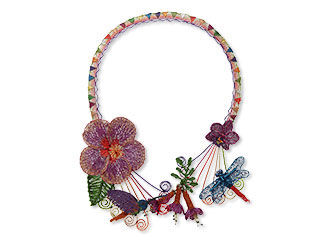
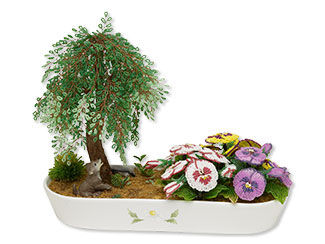
What’s Behind this Reblossoming of French Beaded Flowers?
The 2020-2022 pandemic shutdown led to a population who craved creative outlets beyond the digital. Beading, jewelry-making and other hands-on art forms rose in popularity, as did traditional crafts such as tatting, embroidery, French beaded flowers and others. Artisans discovered this art form in the 21st century say they fell in love with it for a number of reasons:
Beauty and Creative Expression
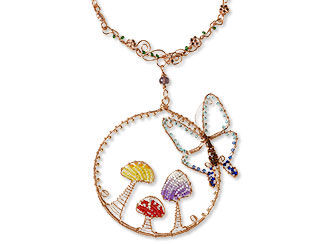
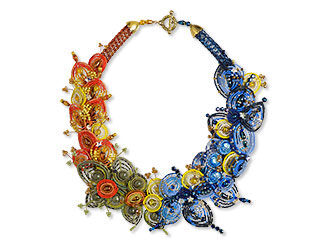
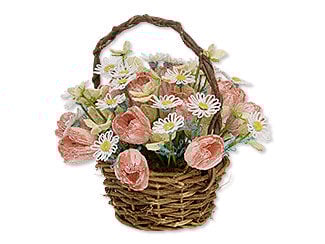
French beaded flowers are known for their intricate detail, delicate appearance and ability to mimic nature. The wire-based French beading technique allows for a wide range of design possibilities, from simple blossoms to elaborate arrangements, encouraging creativity and artistic exploration.
In addition, modern designers are always experimenting with new materials, new techniques and new combinations to create life-like flower patterns. You can find recent books from designers like Lauren Harpster—author of Learn French Beading: Beginner Course: Technique Reference and Practice Flower Patterns (2020)—and Fen Li, author of Bead Flora: the Revival of French Beaded Flowers (2019), as well as 1960s-era classics like The Art of Making Bead Flowers and Bouquets by Virginia Nathanson.
Personalization Possibilities
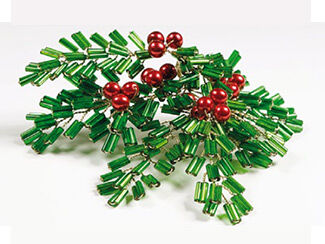
French beaded flowers can be customized to match specific colors, styles or occasions. From prom night corsages to housewarming gifts to holiday “greenery” décor that never dries out, French beaded flowers can be created as gifts or sold to eager gift-seekers.
Personalization options include birth flowers—the floral equivalent to birthstones—and messages in floriography (aka the “language of flowers”)—a subtle Victorian art that’s also reappearing on Instagram, Facebook and TikTok.
Longevity and Durability
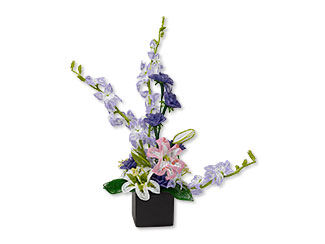
They’re called immortelles for good reasons. Unlike live plants, flowers made with French beading don’t need sunlight or water—and they certainly can’t give anyone hay fever! And beaded flowers are permanent. Unlike fresh flowers, they can be enjoyed for years to come, making them a lasting keepsake or decoration.
This makes them ideal for use as holiday and Mothers’ Day gifts, as alternatives for family members who don’t wear any jewelry besides their wedding rings. Just bead up everyone’s birth flower for a big family bouquet!
Bridal Dazzle
Modern brides, like historic ones, love the beauty of French seed beaded flowers. They are creating their own bouquets, boutonnieres, mothers’ corsages, table décor and wedding favors. Some are mixing it up, for backyard weddings: beaded flowers tucked into live greenery for bold style and easy post-ceremony mementos. Just compost the greenery for great garden!
Historical Appeal
Some artists become deeply invested in the meticulous nature of old art forms and keeping those skills alive. Like calligraphy and stone knapping, the long history makes them enjoy it even more.
French Beaded Flowers - Supplies
The things an artisan needs to create French beaded flowers are simple: wire, beads and tools. The rest is the pattern and the skill. Interested artists can look online to find French beaded flowers patterns free, and then learn the skills involved to make something this beautiful.
Here’s information about the three materials you need:
Wire
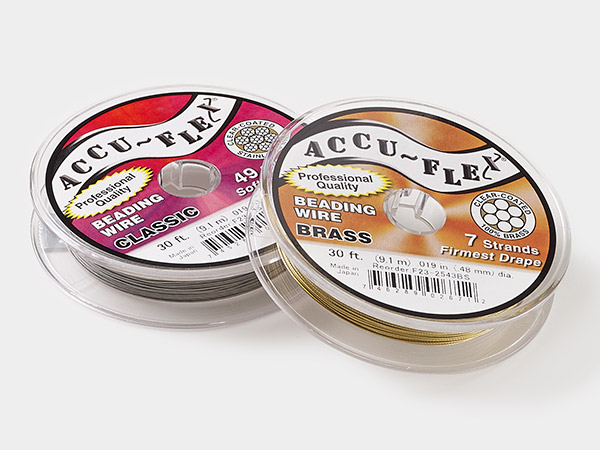
Copper core wire with a color coating, such as Zebra Wire™, is generally recommended for its versatility, flexibility and color options. Wire gauges range from 24 to 28 gauge are the most popular, though designing with very small seed beads may require up to 32 gauge.
Bead flower artist and author Fen Li points out that any creators using older patterns can take advantage of advances in metal technology and use a gauge larger in designs, if the bead holes will accept it. This is especially true for copper, as modern copper art wires are more pliable. This means that 26-gauge copper wire in 1960s or older patterns can be replaced with 24-gauge copper wire without any reduction in wire behavior. Stainless steel wire-wrapping wire offers even more strength for structural elements such as stems or oversized leaves.
Popular wire brands for French bead flowers include ParaWire™, Wrapit® wire and color-coated Zebra Wire™.
Beads
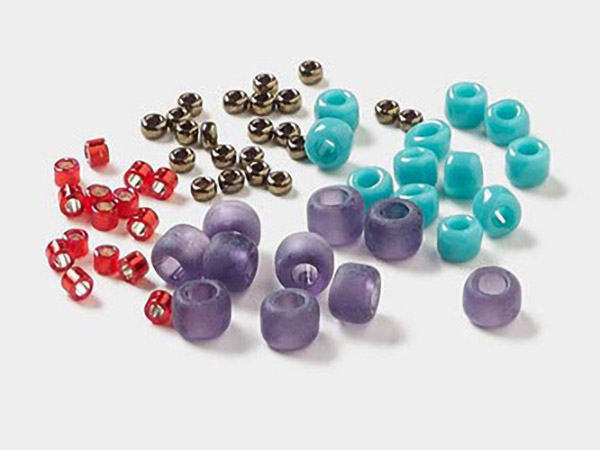
Then, of course, there’s the beads. Most French beading patterns use size 11/0 seed beads. This is the most common size across multiple seed bead brands and a shared standard in the seed beading world. Some flowers (like the saffron crocus) use size 15/0 only in delicate elements of their design, while others (such as baby’s breath) utilize size 15/0 throughout.
Seed Bead Brands
The most common seed bead brands for French beaded flowers are the ones you’d expect: Japanese-manufactured Miyuki Delica®, TOHO BEADS® and Matsuno Dyna-Mites™, as well as Preciosa Ornela Czech glass.
Bulk bead brands such as Ming Tree™ are ideal for stems, background leaves and other supportive structures.
Shapes
Miyuki’s cylinder-shaped Delica beads are not used as often for French beaded flowers, as the artists gravitate toward beads with rounded shapes, for a more natural effect.
Those aren’t the only options, either. Artists can use two-cut or hex-cut shapes for subtle flash, plus bugle beads for flower stems or as pine needles in holiday designs. Individual flowers may require other shapes as well, such as magatama, triangle, fringe, square and more.
Colors and Finishes
Color options have a huge impact on bead selection for French beaded flowers. Matsuno beads like Dyna-Mites are popular in this art form due to the color fidelity of the same bead color across multiple finishes, making subtle and realistic shading easier. In addition, Matsuno seed beads are highly color stable. Artist Fen Li adds that, “In all my years of using Matsunos, there were very few colors that fade with time.”
Finishes add a secondary element to designing and creating French beaded flowers. Artists can choose AB, frosted, ceylon, satin, luster or other finishes that give an otherwise realistic flower an ethereal representation, like a ghost or an afterimage.
Other Beads
Of course, it’s not just seed beads! Other beads are used, depending on the artist’s desired effect.
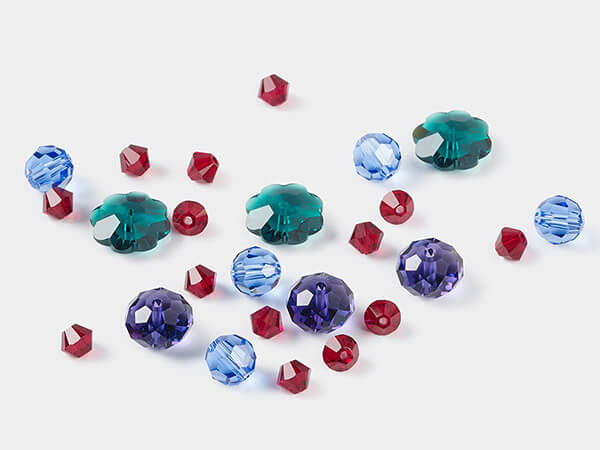
Some incorporate the daintiest of cultured freshwater pearls or gemstone beads as center elements, for just that touch of realistic color. And don’t forget the love of sparkle—Crystal Passions® fans also make French beaded flowers and those blossoms will blow your mind!
Tools and Supplies
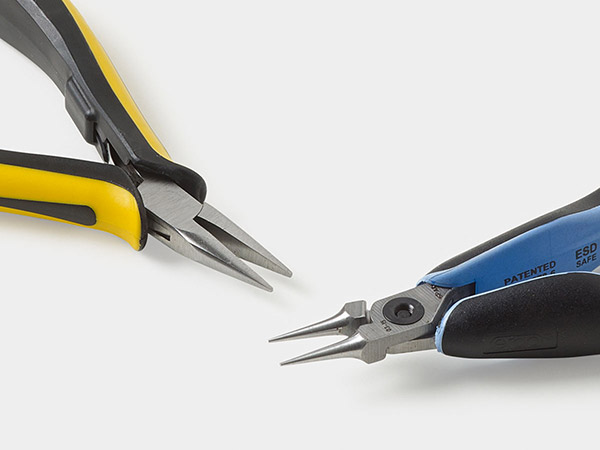
It’s a simple list: nylon-jawed pliers, wire cutters and a bead spinner. With wire-wrapping wire as the stringing material, you don’t need a needle. Just bend the wire into a slight “J” shape and skim the top of the beads in the spinning bowl to thread beads directly onto the wire.
Other useful supplies include floral tape and embroidery floss (to wrap supporting wire flower stems), scissors (to cut tape and floss), small vases and pots (to display the finished flowers) and pebbles or larger glass beads (to support finished flowers in vases and pots). Some artists recycle old bottles and place the flowers in them, filling partially with clear jewelry resin to give the look of water and reduce tipping.
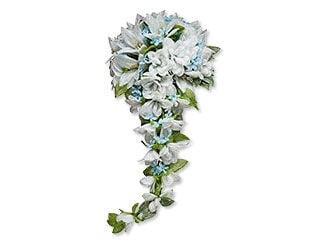
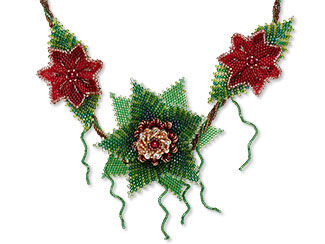
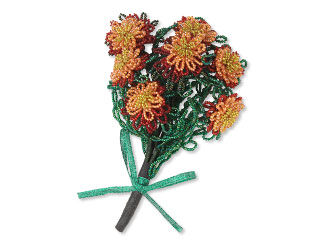
Create forever flowers with fine metal wire and a range of seed, bugle and other tiny beads. The art of French beaded flowers has been given new life by people seeking a hands-on, non-digital outlet for their creativity.
Shop for Your Materials Here:
Have a question regarding this project? Email Customer Service.
Copyright Permissions
All works of authorship (articles, videos, tutorials and other creative works) are from the Fire Mountain Gems and Beads® Collection, and permission to copy is granted for non-commercial educational purposes only. All other reproduction requires written permission. For more information, please email copyrightpermission@firemtn.com.
**Please note that all metaphysical or healing properties listed are collected from various sources. This information is offered as a service and not meant to treat medical conditions. Fire Mountain Gems and Beads® does not guarantee the validity of any of these statements.