

Rhyolite Meaning and Properties

Rhyolite History
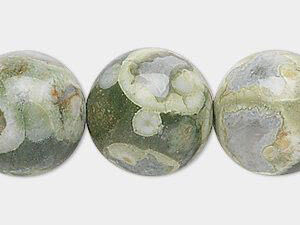
The name rhyolite (from Greek "rhuax" for stream or flow plus "lithos" for stone) was introduced into geology in 1860 by the German traveler and geologist Ferdinand von Richthofen. Rhyolite is an igneous, volcanic rock. It is rich in silicon with a texture that can be glassy, fine grain or a mixture of crystal sizes. Natural rhyolite displays green, cream and occasional brown tones with patterns and inclusions. Because of its similar appearance, rhyolite has been confused with jasper, leading some to incorrectly label it as "rainforest jasper." Although not desirable for construction because it is highly fractured, rhyolite is sometimes used to produce crushed stone for aggregate and fill. It has also been used out of lack of better materials to make stone tools, such as scrapers, blades, and projectile points.
Discover the history, beauty and intriguing qualities of rhyolite. Dev, our graduate gemologist, imparts valuable insights on designing and caring for this stone. Plus, stay tuned for a quick and delightful earring project that you can make in just minutes using this spectacular gemstone.

What are the Metaphysical Properties of Rhyolite?
Perceived as a balancing stone, rhyolite is often recommended to increase self-esteem, self-worth while helping to bring resolution to issues. It is stone that is thought to facilitate change, variety and progress while helping to deal calmly with challenges. Rhyolite meaning is linked to fulfilling one's goals and making one's dreams come true, while strengthening the soul, body and mind. Rhyolite meaning has strong associations with the Earth. And while it is not a birthstone, it is a zodiac stone of Gemini, Sagittarius and Aquarius.
What is Rhyolite Made From?
Rhyolite is extrusive, which means it is igneous volcanic rock that is formed from volcanic magma that flows or explodes into the atmosphere, making it the chemical equivalent of granite. The composition of rhyolite is felsic: primarily igneous quartz and alkaline feldspars. Many gem deposits can be found in rhyolite. This happens when the thick granite-like lava that forms rhyolite cools quickly trapping pockets of gas inside the lava. The trapped gas forms cavities known as "vug" when the lava cools. Hydrothermal gases or ground water move through and precipitate in the vugs forming gem deposits of red beryl, topaz, agate, jasper, and opal. Rhyolite has been found in volcanic mountain ranges in Europe (especially Germany), as well as the Andes, Cascade Range, the Rocky Mountains and other volcanic regions in the Americas, Australia, Asia and Oceania.
- Mineral Information: Felsic, quartz group
- Chemical Composition: SiO2
- Color: Opaque, variable: grey, green, cream and occasional brown and red tones
- Hardness: 6 to 6-1/2 (Mohs)
- Specific Gravity: 2.40 - 2.67
- Refractive Index: 1.59 (Approximately)
How Do You Clean Rhyolite?
Clean rhyolite jewelry with a soft dry cloth to preserve polish. Clean quickly if the jewelry becomes soiled, as jaspers can be porous and easily stained. Wash with warm, soapy water and a softcloth or soft brush. Dry thoroughly.
Rhyolite FAQs
Q: What colors and patterns does rhyolite come in?
A: Rhyolite comes in shades of grey, cream, green and sometimes brown and red hues.
Q: Is rhyolite also known as rainforest jasper?
A: Rhyolite and rainforest jasper are similar but different stones.
Q: Can I back rhyolite in polymer clay and metal clay?
A: While rhyolite is durable enough to withstand the low temperatures required to harden polymer clay, it is less than ideal for metal clay firing.
Designing with Rhyolite
The neutral and earth tones of rhyolite pair up and match well with other earth tones. Examples include rhyolite beads with a touch of red supporting the chestnut hues of a tassel; green-hued rhyolite beads accompanying amethyst beads or pearlized cream druk beads. Because of the patterns and inclusions, rhyolite also goes well with antiqued components such as links, beads and jump rings.
A Few Design Inspirations to Get You Started
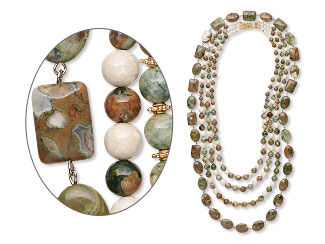

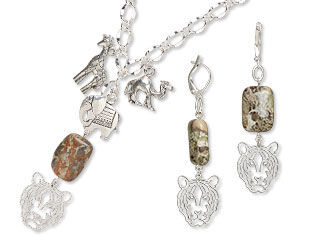
Shop for Rhyolite
**Please note that all metaphysical or healing properties listed are collected from various sources. This information is offered as a service and not meant to treat medical conditions. Fire Mountain Gems and Beads® does not guarantee the validity of any of these statements.
How did you like this resource? Your feedback helps us provide resources that matter to you most.
All works of authorship (articles, videos, tutorials and other creative works) are from the Fire Mountain Gems and Beads® Collection, and permission to copy is granted for non-commercial educational purposes only. All other reproduction requires written permission. For more information, please email copyrightpermission@firemtn.com.