Petrified Wood Meaning and Properties

Petrified Wood History
Petrified wood is often considered a sacred heirloom from the past, as it begins by encapsulating ancient plant material like the giant sequoias or other primeval trees. It is thought that ancient ancestors of Italy, the Etruscans, used petrified wood to create handmade religious objects. Contemporary followers of Etruscan traditions now think of petrified wood meaning as a window to the past, using it to recollect ancient memories.What are the Metaphysical Properties of Petrified Wood?
Many believe in the use of petrified wood in assisting with atrophied muscles and vulnerable skeletal structures by stabilizing the body’s defenses. It is thought to promote balance and calmness, allowing the body to heal in a relaxed, de-stressed environment. As a product of once-living material, petrified wood meaning is often linked to a sacred representation of humankind's connection to the universe. Just as the stone undergoes a dramatic transformation, petrified wood encourages openness to personal transformations as well. Regardless of metaphysical beliefs, the stone can be a representation or reminder to embrace change and/or uncomfortable feelings on your journey to new beginnings.
What is Petrified Wood Made From?
From the Greek word πέτρα (Latin: petra) meaning "rock" or "stone", the name petrified wood translates to "wood turned to stone." During the process of petrification, plant debris is covered with sediment material. This sediment protects the debris from decaying under environmental stressors such as oxygen, rain-water, animals, bacteria, etc. Over time, the build-up of sedimentary material begins to harden around the plant material. Eventually, ground water that is saturated in dissolved rock material flows through the sediment and the plant material is replaced with minerals such as silicate. This process creates a fossilization of the wooden material at the microscopic level and mineral replacement resulting in the appearance of wood, tree rings, and other recognizable wood features known as petrified wood. The mineralized replacement is most often a quartz chalcedony.
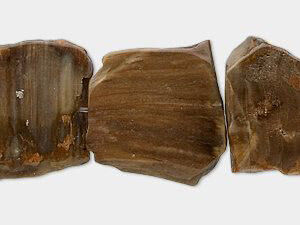
The most commonly found forms of petrified wood are gray and/or brown in color, although rarer varieties may be found that have a green or red hue. Petrified wood is frequently sourced from Argentina, Australia, Brazil, Canada and China.
- Mineral Information: Microcrystalline quartz – chalcedony
- Chemical Composition: SiO2
- Color: Grey, brown, grayish-brown, red, violet, blue, green and yellow colors
- Hardness: 6½ to 7 (Mohs)
- Specific Gravity: 2.58 – 2.64
- Refractive Index: 1.53
How Do You Clean Petrified Wood?
Petrified wood is durable enough (6-1/2 to 7 on the Mohs scale) to be cleaned using ultrasonic cleaners or steamers. Avoid the use of bleach and other harsh household cleaners and be sure to rinse your stones well to ensure all soapy residues are removed.
Petrified Wood FAQ
Q: How old is petrified wood? How long does it take for wood to petrify?
A: Petrified wood is old—make no mistake about it. But depending on variable conditions, petrified wood forming naturally can take anywhere from hundreds to millions of years, according to scientists. In a laboratory setting, however, scientists can create chemically identical petrified wood in days.
Q: Is petrified wood rare?
A: Petrified wood is found all over the world—wherever forests once lived, often near floodplains and/or volcanoes.
Q: Can you find petrified wood in your backyard?
A: It is possible to find petrified wood in your backyard, although it is more likely if you live near rivers, forests and volcanoes—even extinct ones.
Q: Are there different types of petrified wood?
A: Petrified wood varies depending on the source of the wood—the type of tree—as well as what substances infused its cells during mineralization.
Q: Is petrified wood a fossil or a gemstone?
A: Petrified wood is both a fossil—having formed from organic material—and a gemstone, being made of crystalline minerals.
Designing with Petrified Wood
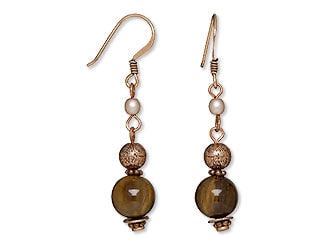
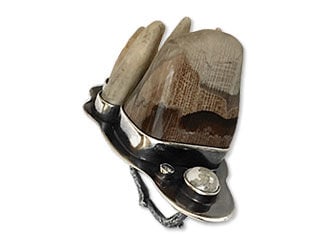
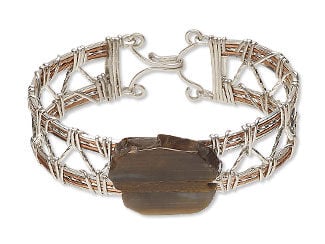
Petrified wood is a beautiful option for nature or cultural-inspired designs. Easily versatile in its use, it can be incorporated into contemporary or unique styles. A great addition to summer and spring necklaces, bracelets or earrings for a down-to-earth style.
A Few Design Ideas to Get You Started
Shop for Petrified Wood
**Please note that all metaphysical or healing properties listed are collected from various sources. This information is offered as a service and not meant to treat medical conditions. Fire Mountain Gems and Beads® does not guarantee the validity of any of these statements.
How did you like this resource? Your feedback helps us provide resources that matter to you most.
Copyright Permissions
All works of authorship (articles, videos, tutorials and other creative works) are from the Fire Mountain Gems and Beads® Collection, and permission to copy is granted for non-commercial educational purposes only. All other reproduction requires written permission. For more information, please email copyrightpermission@firemtn.com.