

A Brief History of Czech Glass Bead Making

The Czech Republic--bordering glass-making powerhouses Austria and Germany--is a country with a rich history of glass all its own. Its beads are valued for their quality and variety, featured in everything from modern designs to valuable heirloom treasures.
The history of Czech glass beads, it is thought, goes back as far as the 3rd century BCE when the Celts began to produce the first glass beads in Bohemia, now known as the Czech Republic. In the middle of the 16th century, glass workshops sprung up across the Jizera mountains, eventually dubbed "the Crystal Valley." From here, Czech glassmakers expanded their trade, exporting glass beads globally.

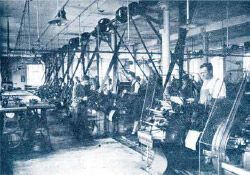
Creating beads in the early days was a painstaking process, with each bead cut, strung and polished by hand. It was also a cottage industry for centuries, employing whole families. One small dwelling might house as many as six cutting and polishing machines, leaving little room for furniture. It wasn’t until the 1830s that machines began producing glass beads.
Over the next several centuries techniques progressed, heavily influenced by Venetian craftsmen. Czech artisans soon adopted these revered methods while also cultivating skills like fire-polished finishes, pressed glass and mass production. These techniques, combined with proximity to trade routes and ample access to natural resources, led to Bohemia becoming a prominent player in the glass world.
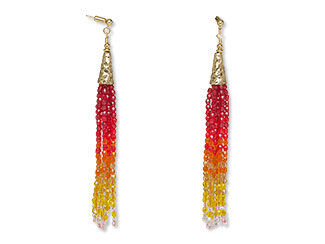
In the 19th century, Josef Riedel--known as the glass king of the Jizera Mountains--settled in the area and established a company that offered beads in over 200 colors and 19 sizes. Ever inventive, Riedel built a factory to produce mechanically cut perfectly round seed beads.
Today, what was once a labor-intensive cottage industry employing entire families is primarily produced in industrialized bead factories. Based in Jablonec nad Nisou, Preciosa is one notable producer of glass and seed beads. Founded in 1948--with the merging of 25 different companies into one national company-- it continues to manufacture jewelry components that are loved the world over.
The History of Preciosa
Courtesy of Preciosa
1548

A new industry emerges as workshops and ateliers for glassmaking begin to pop up across Northern Bohemia's majestic Jizera Mountains, at the heart of which is a small town called Jablonec nad Nisou, and the Crystal Valley is born.
1680
Bohemian jewellers and craftsmen begin making the first glass bead necklaces, which quickly become a sought-after commodity among Bohemian and Saxon aristocracy for their exquisitely polished and perfectly cut stones.
1688
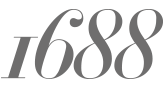
A new, pristine, clear glass, practically indistinguishable from natural mountain crystal, is created and hard enough to be polished for brightness.

1715
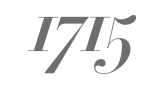
Bohemian glassmakers discover the art of melting coloured glass.
1760
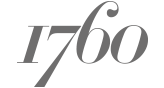
Georg Friedrich Strass, an Alsatian jeweller, invents the first ever rhinestone (artificial gemstone) from a special type of crystal found in the Rhine River.
1765
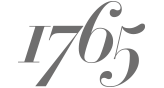
The art of coloured glass stone-making and cutting is refined, which leads to the introduction of imitation gemstones and new spectacular pieces of jewellery.
1856
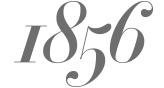
Less than two decades after the first school of glass is founded in the Crystal Valley, the first school of glass jewellery is founded in Jablonec nad Nisou.
1878
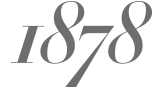
The World Exhibition in Paris brings with it a newfound demand for 'diamond jewels' that can be sewn onto clothing. Crystal Valley glassmakers respond, creating a glass component with a 'silver mirror' on the underside of the stone, known today as foiling paper.
1898
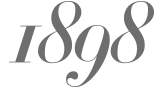
Bohemian glassmakers revolutionize the jewellery making industry by introducing a new technique of fastening crystal components into metal jewellery cups.
1908
Machine-cut jewellery stones, known as chatons, are for the first time produced on proprietary cutting and polishing machines, resulting in a boom of new designs and applications.
1948
Preciosa is officially established in the wake of World War II when 25 small, medium and large-scale companies and factories scattered throughout the Crystal Valley merge together into one national company in Jablonec nad Nisou, where Preciosa is still headquartered today.
1956
Preciosa founds the Research Institute of Glass and Jewellery in Jablonec nad Nisou, which today serves as an integral part of the company and remains one of the most respected R and D facilities in the glass industry.
2011

Preciosa introduces its trademarked Hi-Pure Crystal technology for an even more defined brightness as well as its Dura-Foiling process, which allows for better adhesion and stronger durability during secondary manufacturing.
2013

The times call for greener products and Preciosa comes through with lead-free crystal. This unique material, with its extraordinary sparkle, meets the highest international standards of quality and environmental certification. We named it MAXIMA by PRECIOSA®.
2017

After more than three years of development, Preciosa introduces its premium MC Chaton Rose MAXIMA line. Capable of reflecting up to 264 unique rays of light--the most of any competing product available on the global market--this new crystal becomes the shiniest in the world.
Shop for Your Materials Here:
Have a question regarding this project? Email Customer Service.
All works of authorship (articles, videos, tutorials and other creative works) are from the Fire Mountain Gems and Beads® Collection, and permission to copy is granted for non-commercial educational purposes only. All other reproduction requires written permission. For more information, please email copyrightpermission@firemtn.com.