

Lodolite Meaning and Properties

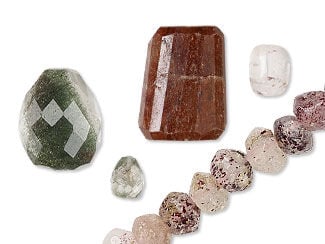
Lodolite , also called “garden quartz,” “scenic quartz,” “landscape quartz” and “dream crystal,” is a variety of quartz containing inclusions of chlorite, hematite , feldspar and other minerals that create the appearance of tiny landscapes and undersea scenes with moss, ferns, mountains and more. The name “lodolite” comes from the Portuguese word lodo, meaning “mud” or “silt.” Lodolite, the mud stone, is a more recently discovered gemstone, found mainly in Brazil.
What are the Metaphysical Properties of Lodolite?
Lodolite meaning is thought to be linked to protection from negativity and harm as well as strengthening the immune system. Lodolite is thought to have a calming influence, important in emotional and physical growth and healing. It is associated with balancing the crown and heart chakras
, with the result of promoting harmony and balance. The beauty of dimensionality of its appearance has caused lodolite meaning to be associated with meditation and the inner life.
What is Lodolite Made From?
Quartz forms when silica-rich fluids become deposited inside other rocks forming crystals. In the formation of lodolite, other minerals are trapped inside the growing crystals, forming miniature scenery: forests, gardens, moonscapes and others.
Red and brown inclusions indicate the presence of hematite, while yellow, white or beige inclusions mean feldspar is part of the lodolite’s internal landscape. Mossy green inclusions are chlorite, and, more rarely, rutile will leave spiky golden inclusions, similar to those in rutilated quartz.
Lodolite consists of clear, smoky or milky-white quartz with inclusions in shades of green, gold, brown, black and red, organic hues that inform the perception of the miniature natural landscapes inside each crystal. Lodolite properties include a glassy sheen, but this can vary with the inclusions and the treatment of the stone.
Most lodolite is found in Minas Gerais, Brazil, although smaller deposits with slightly different characteristics have been found in Madagascar, Kazakhstan and the US states of North Carolina, Colorado and California.
- Mineral Information: Macrocrystalline quartz with inclusions
- Chemical Composition: SiO2 inclusions of hematite, feldspar, chlorite and, less typically, rutile and others
- Color: Colorless, smoky or milky white with red, brown, black, green and golden inclusions
- Hardness: 7 (Mohs)
- Specific Gravity: 2.62 – 2.68
- Refractive Index: 1.54 - 1.55
How Do You Clean Lodolite?
Like other quartz varieties, lodolite should be cleaned with warm, soapy water and a soft cloth or brush. Though it is relatively hard, it can still be scratched by harder materials. Avoid exposure to harsh chemicals, extreme heat or prolonged sunlight, which may alter the stone's appearance and make it more prone to cleavage. Store lodolite jewelry separately in a soft pouch or fabric-lined box to prevent damage.
Lodolite FAQs
Q: How do I know a lodolite gemstone is genuine?
A: Read lodolite will feel cool to the touch, absorbing warmth from the hand very slowly. Resin copies will warm more quickly and will feel lightweight in the hand. Lodolite should feel dense and heavy. Also watch for the organic patterns inherent in true lodolite. Too much uniformity may indicate a manmade specimen.
Q: Is lodoite a type of quartz?
A: Yes, lodolite is a type of quartz with inclusions of other minerals.
Q: Is lodolite rare?
A: Lodolite is considered a moderately rare gemstone. Not only that, every stone is unique due to its combination of inclusions that give each piece its own one-of-a-kind landscape scene.
Q: What is the difference between lodolite and phantom quartz?
A: Phantom quartz does have a landscape-like appearance, but with phantom quartz, this is due to the crystal’s interrupted pattern of growth and not due to inclusions, as it is with lodolite.


Designing with Lodolite
With its mossy, organic inclusions, lodolite looks beautiful with nature-themed or boho designs. Pair with other included gemstones like moss agate or dendritic opal, or choose neutral, foresty hues that enhance the theme of the scenic inclusions in the lodolite. Either silver- or gold-hued metals will work well with lodolite, depending on the shade of the inclusions in each specimen.
Shop for Lodolite Beads
**Please note that all metaphysical or healing properties listed are collected from various sources. This information is offered as a service and not meant to treat medical conditions. Fire Mountain Gems and Beads® does not guarantee the validity of any of these statements.
How did you like this resource? Your feedback helps us provide resources that matter to you most.
All works of authorship (articles, videos, tutorials and other creative works) are from the Fire Mountain Gems and Beads® Collection, and permission to copy is granted for non-commercial educational purposes only. All other reproduction requires written permission. For more information, please email copyrightpermission@firemtn.com.