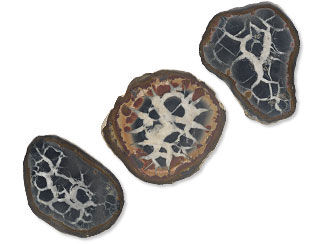
Each septarian specimen is unique with a joyous, ancient quality. They look fantastic and are thought to have beneficial metaphysical abilities, too.
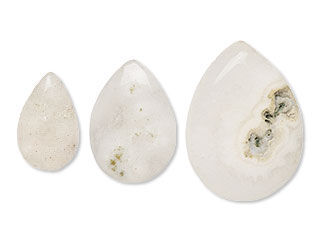
Quartz, Solar
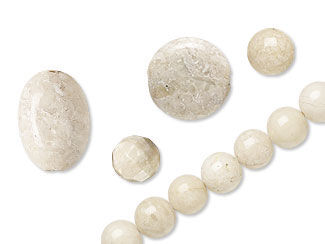
Solar quartz is a rare formation of white crystalline quartz with some druzy inclusions and beautiful natural orbicular patterns that may have green or brown moss-like inclusions.
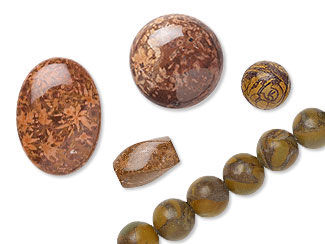
Chrysanthemum Stone
Chrysanthemum stone blends the beauty of both earth and moon. It contains the rich dark brown color of soil and the golden glow of moonlight.
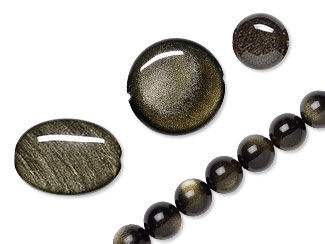
Obsidian, Golden Sheen
Black and gold are a timeless pairing--and golden sheen obsidian proves their elegance. Additionally, the reflective nature of obsidian makes it a favorite for self-reflective meditation.
Rhyolite
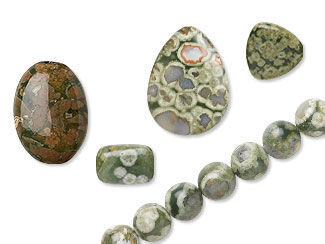
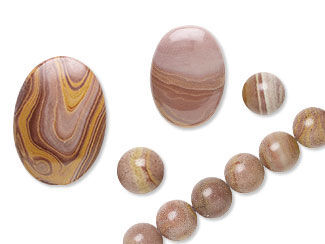
Rhyolite gets its name from the Greek words for "stream" and "stone," which may seem like counterintuitive concepts, but how this gemstone forms actually makes sense with its name.
Riverstone
Riverstone is light tan to light brown and is a favorite neutral in jewelry. The stone takes pigment well and is often dyed. Luckily, the dyed stone still retains perceived metaphysical properties.
Opal, Ethiopian
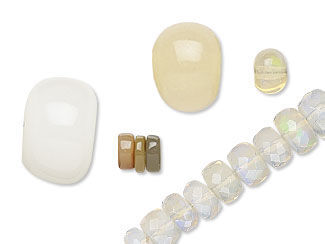
Ethiopian opal has a milky white to light amber base coloring and displays the play of color that makes opals both famous and highly desired for jewelry.
Unakite
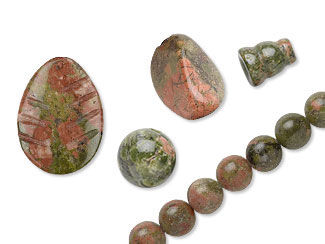
Unakite is a great stone for men's and unisex jewelry styles. It's a colorful choice that works with a range of metals and other materials due to its mix of cool and warm hues.
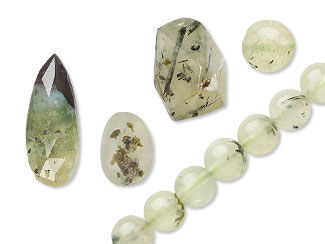
Prehnite
The gemstone with a dozen names, prehnite has been given numerous other names over the years. Whatever you call it though, the soft, soothing green gemstone is a delight for jewelry.
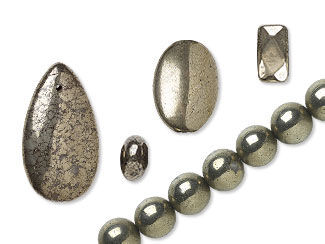
Pyrite
Due to pyrite's color, luster and high specific gravity, it has been mistaken for gold, hence the nickname: fool's gold. But don't be fooled into thinking pyrite isn't perfect for jewelry!
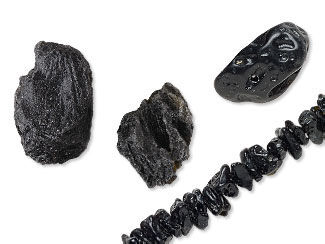
Tektite
Looking to design with a gemstone that's out of this world? Tektite is a form of natural glass that forms not from the heat of volcanoes, but from atmospheric friction on meteorites.
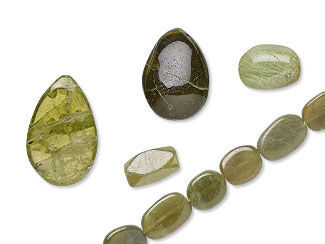
Vesuvianite
Vesuvianite jewelry has been used as a gift to newlyweds due to its connotations as a cooperative stone that facilitates awareness of one's heart and an ability to express love.
Angelite
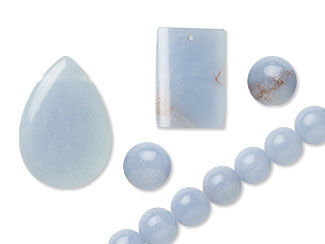
With "angel" in its name, it's no surprise soft-blue angelite gemstones have perceived metaphysical abilities related to improving spirituality and bringing about a peaceful energy.
Soapstone
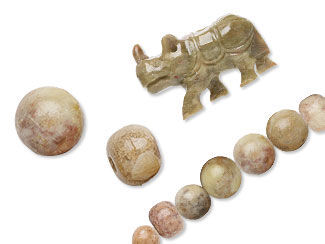
Soapstone is incredibly soft, which makes it a perfect stone for carving. Natural soapstone tends to have light shades of gray, green or brown, making it ideal for autumn-themed jewelry.
Jet
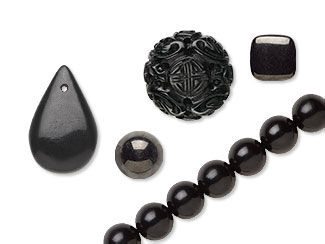
Jet is an ideal addition to feminine, masculine and unisex jewelry. Black has been fashion's staple color for a reason. It's smart, sophisticated and goes with literally everything.
Cinnabar
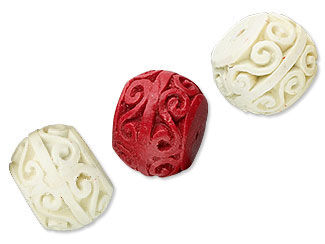
Cinnabar is an ore and a crystal, a variant of quicksilver--what medieval alchemists called the element mercury. Cinnabar is considered a powerful stone both physically and metaphysically.
Zirconia, Cubic
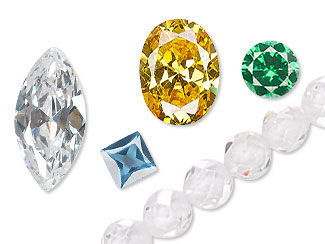
Cubic zirconia (referred to as CZ) is a lab-grown gemstone, but don't let that taint your feelings on this gorgeous diamond simulant that actually is said to still possess metaphysical traits.
Autumn Hickoryite
According to metaphysical beliefs, autumn hickoryite stimulates imaginative thinking and a desire for adventure. Perhaps a desire for jewelry-making adventures?
Selenite
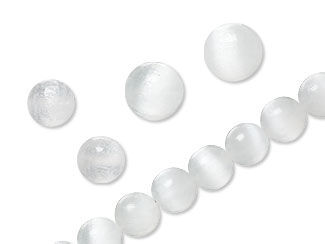
Selenite gemstones are the perfect addition to any jewelry palette. Need an angelic-looking stone for bridal jewelry? Evening wear jewelry? Maybe Christmas? Selenite does it all!
Mica
In jewelry-making, mica is most commonly found in a powder form used to create colorful, pearly and beautifully shiny accents on polymer clay, resins or other surfaces.
Crazy Horse™ Stone (Calcite)
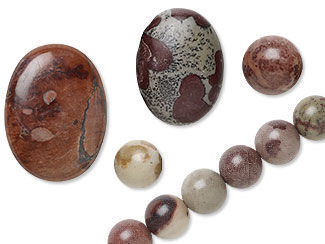
Crazy Horse™ stone is the trade name for a calcite showcasing a distinct appearance of brown, grey and tan with some mauve and pink color combinations.
Kyanite
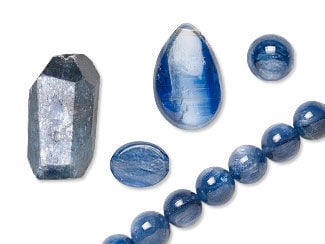
Kyanite gets its name from the Greek term for blue, which it certainly is! Kyanite is one of the most attractive blue minerals, exhibiting intense blue or multiple shades in a single crystal.
Lepidolite
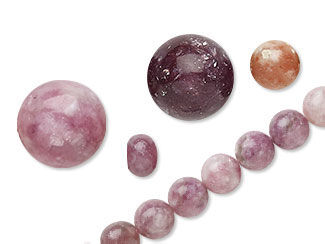
With its variety of pinkish rose to purple hues along with other shades, lepidolite offers incredible tonal flexibility in jewelry designs, pairing well with other gemstones and metal tones.
Cuprite
If Cuprite had a theme song, it would be "I Will Survive" by Gloria Gaynor since this intriguing green and deep-red gemstone is the stone of survival due to its metaphysical abilities.