Essential Resources

Explore Resources

Results Per Page 24 | 48 | 96
Sort By
Sort
  • Name A-Z
  • Name Z-A
  • Newest First
  • Oldest First
Page 3 of 24
How-To: Single Strand Slider Bracelet

How-To: Single Strand Slider Bracelet

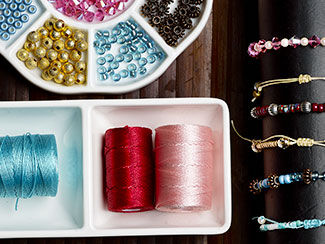
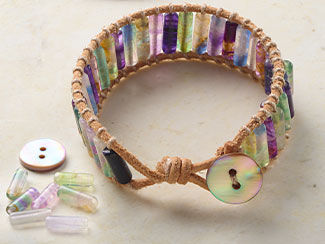
Join Caitlyn and Elaine and learn how to make a slide-clasp knot closure for stylish bracelets.
Pass Through vs. Pass Back Through

Pass Through vs. Pass Back Through

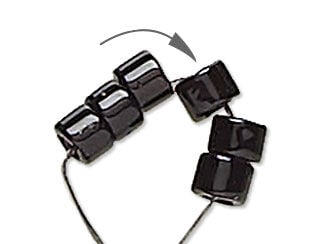
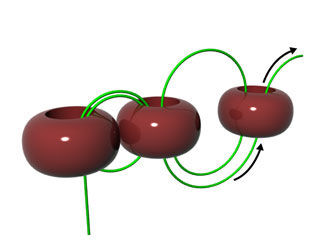
Pass through means to move your needle in the same direction that the beads have been strung. Pass back through means to move your needle in the opposite direction.
Flat Herringbone Stitch

Flat Herringbone Stitch

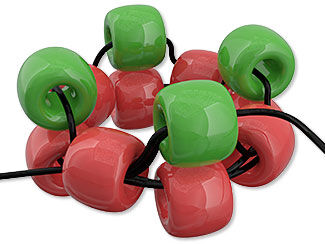
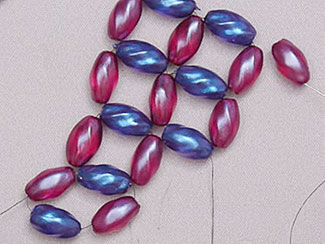
Begin with a foundation row of even-count ladder stitch. String 2 beads, pass down through the second to last bead in the ladder, and up through the next bead. String 2 beads, pass down the next bead and then up through the following. Repeat to the end of the row. To end the row, pass back through the last bead strung. To begin the next row, string 2 beads and pass down through the second to last bead of the previous row. Repeat, stringing 2 beads per stitch and passing down then up through two beads of the previous row. The 2-bead stitch will cause the beads to angle-up in each row, like a herringbone fabric.
Tubular Peyote Stitch

Tubular Peyote Stitch

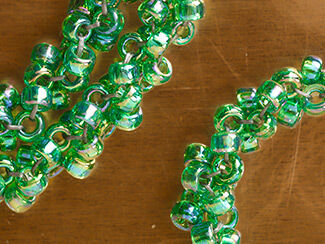
String an even number of beads and make a foundation circle by passing through them two more times, exiting from the first bead strung. String 1 bead and pass through the third bead of the foundation circle. String 1 bead and pass through the fifth bead of the foundation circle. Continue adding 1 bead at a time, skipping over 1 bead of the first round, until you have added half the number of beads of the first round. Exit from the first bead of the second round. String1 bead, pass through the second bead added in the second round and pull thread tight. String 1 bead and pass through the third bead added in the second round. Continue around, filling in the ''spaces'' 1 bead at a time. Exit from the first bead added in each round.
Ladder Stitch

Ladder Stitch

Using two needles, one threaded on each end of the thread, pass one needle through one or more beads from left to right and pass the other needle through the same beads from right to left. Continue adding beads by crisscrossing both needles through one bead at a time. Use this stitch to make strings of beads or as the foundation for brick stitch. For a single-needle ladder, string 2 beads and pass through them again. String 1 bead. Pass through the last stitched bead and the one just strung. Repeat, adding one bead at a time and working in a figure-eight pattern.
 Flat Peyote Stitch

Flat Peyote Stitch

One-drop peyote stitch begins by stringing an even number of beads to create the first two rows. Begin the third row by stringing one bead and passing through the second-to-last bead of the previous rows. String another bead and pass through the fourth-to-last bead of the previous rows. Continue adding one bead at a time, passing over every other bead of the previous rows. Two-drop peyote stitch is worked the same as above, but with two beads at a time instead of one.
Hot vs. Cold Jewelry Connections:

Hot vs. Cold Jewelry Connections:

Patti walks you through a range of hot and cold connections so you can see which type of connection each of your jewelry designs need.
Learn How to Make a Beaded Picot Edge

Learn How to Make a Beaded Picot Edge

Begin your creative journey with seed beads today by mastering the fundamentals of bead embroidery. Join Rose and follow along to learn how to create a beaded picot edge in this step-by-step video tutorial.
Right-Angle Weave (Single Needle) Stitch

Right-Angle Weave (Single Needle) Stitch

The right angle weave (RAW) is a basic jewelry-making stitch often used with seed beads and crystal beads. String 4 beads and pass through them again to form the first unit. For the rest of the row, string 3 beads, pass through the last bead passed through in the previous unit, and the first two just strung; the thread path will resemble a figure-8, alternating directions with each unit. To begin the next row, pass through the last 3 beads strung to exit the side of the last unit. String 3 beads, pass through the last bead passed through, and the first bead just strung. *String 2 beads, pass through the next edge bead of the previous row, the last bead passed through in the previous unit, and the last 2 beads just strung. Pass through the next edge bead of the previous row, string 2 beads, pass through the last bead of the previous unit, the edge bead just passed through, and the first bead just strung. Repeat from * to complete the row then begin a new row as before.

Right-Angle Weave (Double Needle)

Right-Angle Weave (Double Needle)

Using two needles, one on each end of the thread, string three beads on one of the needles and slide them to the center of the thread. String a fourth bead, passing one needle through from left to right and passing the other needle through from right to left. String one bead with each needle, then pick up one more bead and pass one needle through from left to right and pass the other needle through from right to left. Continue for desired length of row. To work the next row, repeat as for the first row, stringing new beads only onto the right thread and passing back through beads from the first row with the left thread. To make a row-end decrease, simply stop your row short and begin a new row.
Tubular Chain Stitch

Tubular Chain Stitch

Begin your creative journey with seed beads today by mastering the essentials of tubular chain stitch. Follow the step-by-step video tutorial with Rose.
Top 5 Tips for Working with Polymer Clay

Top 5 Tips for Working with Polymer Clay

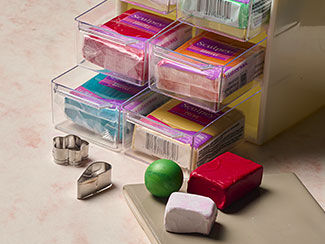
Polymer clay artist Elaine shares the top five tips for working with polymer clay including baby wipes, cornstarch and more.
Learn Quilling With Seeds Beads

Learn Quilling With Seeds Beads

Embark on your creative journey with seed beads today by mastering the fundamentals of quilling with seed beads. Follow along with Rose in this step-by-step video tutorial.
5 Reasons Why You Should Start Making Jewelry

5 Reasons Why You Should Start Making Jewelry

Join Caitlyn of Busy Beader to discover five reasons why you should start making jewelry.
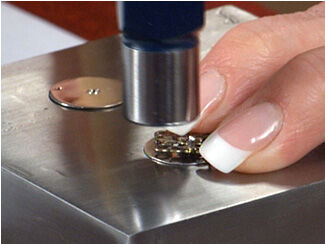
Getting Started with Hammers

Getting Started with Hammers

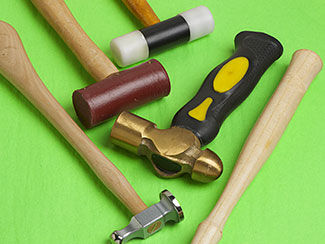
Discover how to choose the perfect hammer for each jewelry-making project with Patti in this product spotlight video.
How To Do a Net Stitch

How To Do a Net Stitch

Embark on your creative journey with seed beads today by mastering the fundamentals of net stitch. Follow along with Rose in this step-by-step video tutorial.
Twisted Fringe How-To

Twisted Fringe How-To

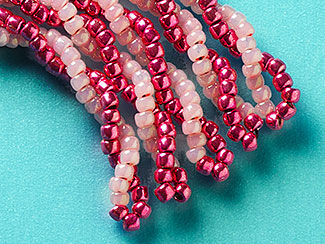
Tassels... with a twist! Follow along with Rose to learn how to add a fun spin using the twisted fringe beading technique.
Elaine's Top 5 Polymer Clay Tools

Elaine's Top 5 Polymer Clay Tools

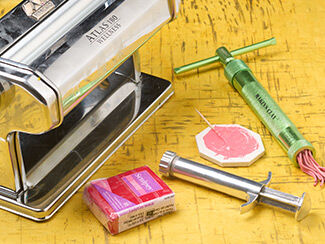
Elaine shares the top five tools for working with polymer clay. Discover how to use these tools, including a roller machine, a clay extruder and more.
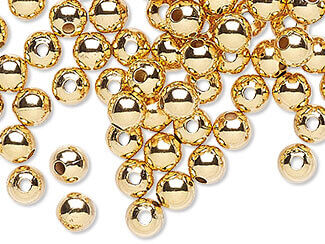
Gold-Plated

Gold-Plated

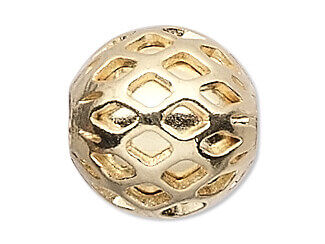
Items have an industry standard of .15 to .25 mils thickness of gold which is plated to the surface of the base metal.
Learn the Flat Cellini Seed Bead Stitch

Learn the Flat Cellini Seed Bead Stitch

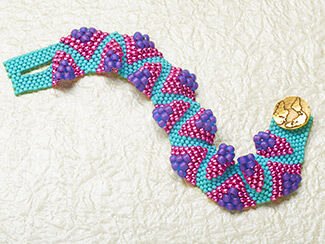
Embark on your creative journey with seed beads today by mastering the fundamentals of the flat Cellini or three-dimensional stitch. Follow along with Rose in this step-by-step video tutorial.
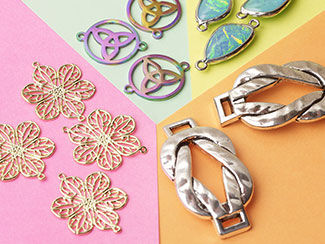
Product Spotlight: Easy DIY Jewelry with Links

Product Spotlight: Easy DIY Jewelry with Links

Discover the different links available and how to use these components in jewelry making to save time and create beautiful one-of-a-kind pieces.
Gemstones Around the World

Gemstones Around the World

Where do gemstones come from? Discover the origins of your favorite gemstones from around the world (or beyond).
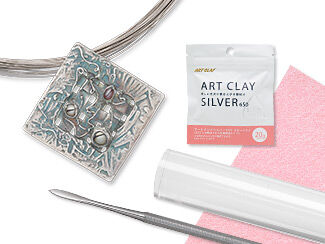
Metal Clay Kit Resources

Metal Clay Kit Resources

Welcome to the online resource page for your new Metal Clay Kit! Below you will find all you need in order to get started making unique metal clay jewelry.
Video Tutorial: Iolite Bead and Cabochon Earrings

Video Tutorial: Iolite Bead and Cabochon Earrings

Follow along with Patti, a jewelry designer here at Fire Mountain Gems and beads jewelry studio, teaching a simple and elegant technique that can level up your jewelry making skillset with just a few materials and tools.
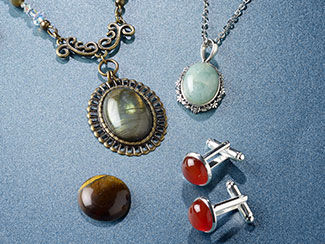
5 Ways to Use Cabochons

5 Ways to Use Cabochons

Watch this video to discover 5 creative ways to use cabochons in jewelry making! Learn how to craft stunning pendants, rings, earrings, charms, and more with these versatile stones.
Plated

Plated

Learn about plated metals: what they are, why they're used in jewelry, and how to take care of them so they stay looking their best.
Tila Bead Bracelet Design

Tila Bead Bracelet Design

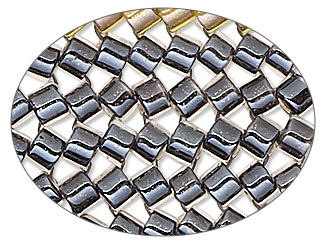
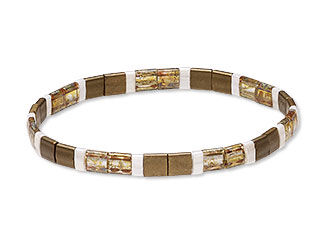
Explore the unique versatility of Tila® beads from Miyuki of Japan. Learn how to use these distinctive, flat, square-shaped beads with dual beading holes to craft fashionable stackable stretch bracelets.
The Big 3 Brands of Crystal Beads

The Big 3 Brands of Crystal Beads

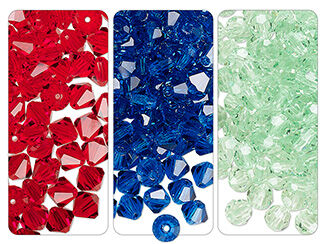
Love the look of crystal, but unsure which brand to shop? Discover the highlights of each of the top three crystal manufacturers.
Colorfastness in Beads and Jewelry-Making Supplies

Colorfastness in Beads and Jewelry-Making Supplies

Avoid color bleed in beads! Learn all about colorfastness, how to identify what jewelry-making supplies are colorfast and tips for protecting color in your creations.
Anodized

Anodized

Learn the meaning of "anodized" and how it enhances both the visual appeal and durability of jewelry pieces.
Secrets to Wireworking

Secrets to Wireworking

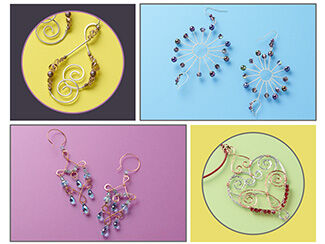
Join Patti on a journey through the Secrets to Wireworking. Moving from basic to complex designs, this video series covers a variety of techniques to expand your jewelry-making prowess .
Top 10 Best-Selling Chains

Top 10 Best-Selling Chains

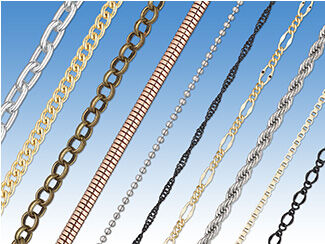
Are you in a chain rut? Here are top-selling chains and design ideas to help guide your jewelry production.
Seven Principles of Design for Jewelry-Making

Seven Principles of Design for Jewelry-Making

Turn jewelry making into an art form with these 7 key design principles. Learn how balance, movement and more can inspire new heights of creativity.
The Gemstone Information Manual by the American Gem Trade Association

The Gemstone Information Manual by the American Gem Trade Association

The Federal Trade Commission Guides for the Jewelry Industry as revised April 10, 2001 are designed to prevent unfair or deceptive trade practices.
The Story Behind the Boss' Bead Bag

The Story Behind the Boss' Bead Bag

Discover the story of the Boss' Bead Bag, a unique mix of beads born from a serendipitous accident. Get your hands on a bundle of beading goodness in one grab bag!
Say it with Chain

Say it with Chain

Every design has a story. Learn how to share who you are and why you make jewelry so people can build a relationship with you and your work.
Royal Blues

Royal Blues

Discover the timeless allure of royal blue and draw inspiration for your most profound blue creations.
Easy on the Eyes—Tips to Improve Your Work Area

Easy on the Eyes—Tips to Improve Your Work Area

Good light is so important when beading. Here are some ideas about lighting and other ways to improve the beading workspace.
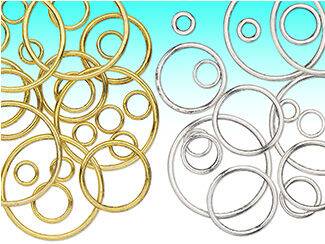
All About Jump Rings

All About Jump Rings

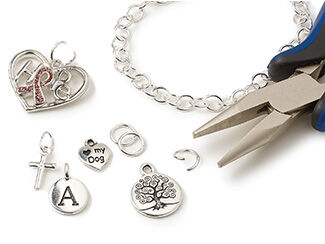
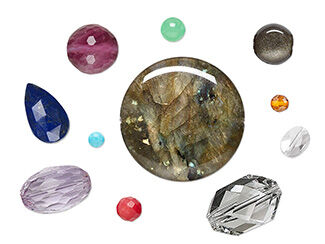
Delve into our extensive jump ring resource. Here you'll find a wealth of information about one of the most versatile jewelry-making resources, from sizes and materials to chainmaille weaves.
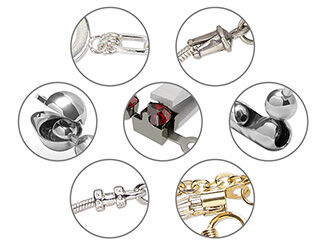
Six Ways to Create Cold Connections

Six Ways to Create Cold Connections

No need to be a blacksmith to join metal to metal—you can use cold connections! Here are 6 ways to connect metals (or other materials) without using fire or electricity.
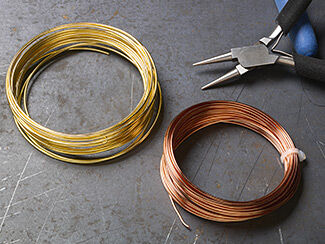
Choosing a Wireworking Wire

Choosing a Wireworking Wire

Choosing the best wire for your wireworking project makes it easier to achieve your vision for your design.
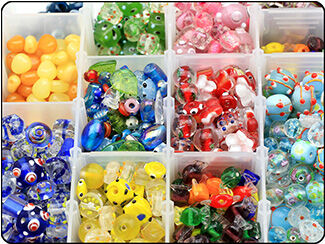
How Glass Beads are Made

How Glass Beads are Made

Glass beads have been a favorite jewelry-making supply for thousands of years. Learn about the ancient techniques used to craft various types of beads.
Top 7 Ways to End Jewelry Chain

Top 7 Ways to End Jewelry Chain

View this helpful guide to the top 7 ways to finish jewelry chain from our in-house jewelry-making experts.
Geometric Jewelry

Geometric Jewelry

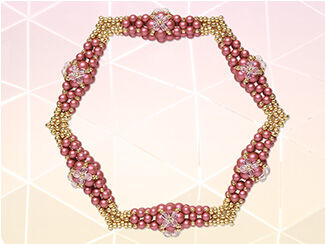
Explore how to use geometric shapes for limitless design possibilities.
Hematite OR Hemalyke™: Knowing the Differences

Hematite OR Hemalyke™: Knowing the Differences

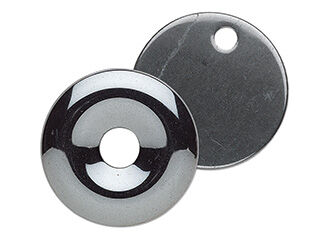
Read on to discover the differences between natural hematite and man-made Hemalyke™ beads and components.
Secrets to Seed Beading

Secrets to Seed Beading

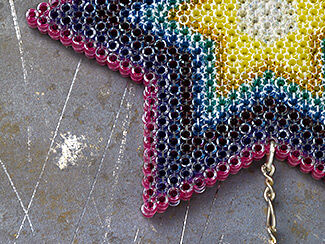
Join Rose in our Secrets to Seed Beading series, where she demonstrates a range of bead stitches and techniques that will enhance your jewelry-making abilities.
Results Per Page 24 | 48 | 96
Sort By
Sort
  • Name A-Z
  • Name Z-A
  • Newest First
  • Oldest First
1,138 Resources Found
Page 3 of 24