Tools & Supplies

Explore Resources

Results Per Page 24 | 48 | 96
Sort By
Sort
  • Name A-Z
  • Name Z-A
  • Newest First
  • Oldest First
Page 3 of 12
Selecting the Right Bead Reamer

Selecting the Right Bead Reamer

Bead reamers are an important tool. Use this helpful guide to choose the correct reamer for all your jewelry-making needs.
Turquoise: Then and Now

Turquoise: Then and Now

What do the ancient Egyptians, Native Americans, 1970's celebrities and people today all have in common? A love of turquoise! Explore this gemstone's popularity throughout history.
A Guide to Jewelry-Making Hand Tools

A Guide to Jewelry-Making Hand Tools

In jewelry making, it's important to have the right tools. Check out this guide to learn the right tool for every job, ensuring a professional finish each time.
A Guide to Metals

A Guide to Metals

What does your choice of metal say about you? This article explores the meaning of different metals in jewelry designs to help you learn what your jewelry is saying.
Accurate Measuring in Jewelry-Making

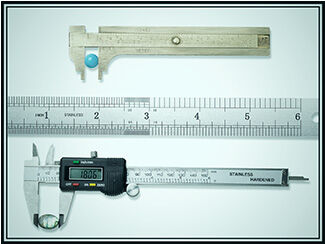
Accurate Measuring in Jewelry-Making

Learn how to save time and money by taking the guesswork out of wireworking and metalsmithing by learning how to accurately measure. In this article jewelry-making expert Sandra Lupo teaches us how to accurately measure for jewelry-making success.
A Guide to Bails

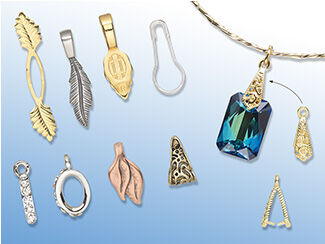
A Guide to Bails

Ever wonder what a bail is? How do you use it and what should you look for to find what you need for your designs? All of that has been compiled in one handy location.
Mandrels for Jewerly-Making

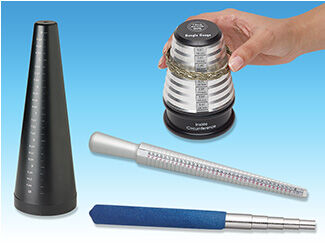
Mandrels for Jewerly-Making

Have questions about mandrels? Learn all about this valuable metalsmithing tool and the different options available in this article on mandrels.
A Brief History of Czech Glass Bead Making

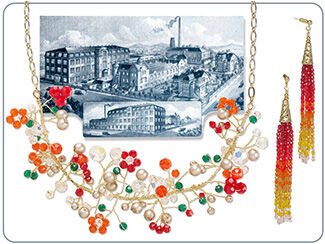
A Brief History of Czech Glass Bead Making

Travel to the Crystal Valley and explore the rich heritage of Czech glass beads.
Torch-Fired Enameling for Jewelry

Torch-Fired Enameling for Jewelry

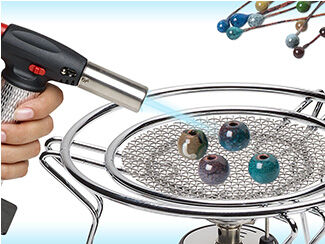
The benefits of torch-firing enamel can be incredible for your designs as you don't need to rely on a bulky kiln. The end result is beautiful enameled beads and metal just for you.
Jewelry-Making Wire: Non-Precious Metal, Colored and Steel Wires

Jewelry-Making Wire: Non-Precious Metal, Colored and Steel Wires

Learn about different types of non-precious jewelry-making wire—copper, niobium, aluminum, memory wire and more—and how to use each metal.
Cold Connections

Cold Connections

Using cold connections can really change how your jewelry comes together. Find out what metalsmithing master Tammy Honaman says are some of the best tools for cold connecting metal.
Intro to Leather

Intro to Leather

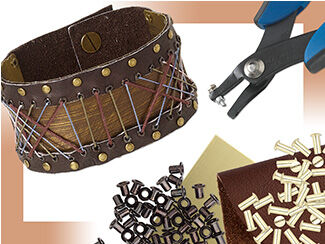
Have you never worked with leather before? It can be tough (heh) sometimes but don’t worry, Tammy Honaman is here to guide you like only a jewelry-making expert can.
Opal: Benefits of Synthetic and Manmade Stones

Opal: Benefits of Synthetic and Manmade Stones

Opal is an uncommon gemstone with an uncommon beauty and fragility, leading it to be recreated in the lab as a stronger composite that withstands more stress.
How to Use a Bead Board

How to Use a Bead Board

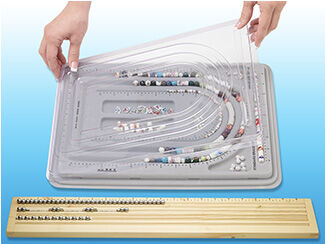
Make your designing life easier with bead boards. Learn the bead board types and how these tools are advantageous to the beginner as well as the high-producing professional.
The Unlocked Mysteries of Jade:

The Unlocked Mysteries of Jade:

Delve into the rich history and cultural significance of jade, highlighting its revered status in Chinese culture, its exceptional toughness, and its various forms, including jadeite and nephrite, as well as its widespread use in jewelry and carvings, with an emphasis on the importance of color, translucency, and texture in determining jade quality.
The Importance of Daylight Lamps

The Importance of Daylight Lamps

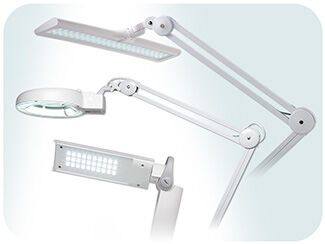
Discover the complex nature of light and the human eye and the importance of daylight, not only in jewelry-making but all forms of art to find true color.
Sterling Silver-Filled Wire and Findings

Sterling Silver-Filled Wire and Findings

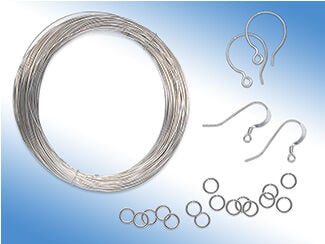
Find the answers to your questions about sterling silver-filled wire and findings in this performance results test conducted by jewelry-making experts. Discover why this metal offer a tremendous value and amazing workability.
5 Ways to Make a Bail

5 Ways to Make a Bail

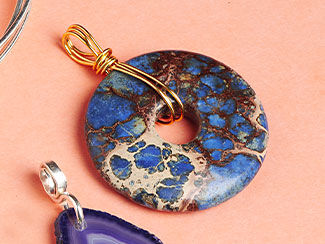
Jewelry designer Patti presents five ways to make a bail, including a folded component bail, hammered and rolled wire bail, layered jump ring bail and more.
How Lampwork Glass Pendants are Made

How Lampwork Glass Pendants are Made

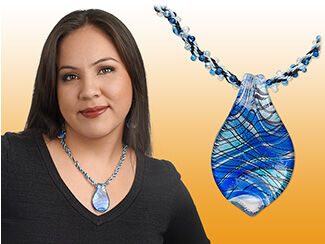
An in-depth look at the art of crafting lampwork glass pendants, exploring the process with fire and steel tools, the types of glass used, and the history of lampworking, highlighting the essential tools and materials.
Cutting Glass with Glass-Cutting Tools

Cutting Glass with Glass-Cutting Tools

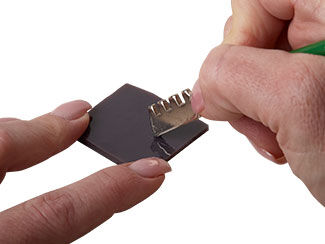
There are two styles of glass cutters: dry and oil-filled. This tutorial shows how to use both types, each with illustrated step-by-step instructions.
Setting up a Safe Kiln-Firing Area and Firing Enamels with a Kiln

Setting up a Safe Kiln-Firing Area and Firing Enamels with a Kiln

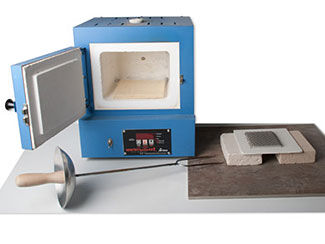
Firing enamel in a kiln might appear challenging, but fear not—these step-by-step instructions empower you to confidently and safely craft brilliant, gleaming jewelry projects.
Ask the Experts Adhesive Q&A

Ask the Experts Adhesive Q&A

Q: Sure hope you can help me. I'm making a necklace and my pendant is a lampwork bead, sort of rondelle shaped. I want to use a large jump ring, 17mm, but I am having trouble as it does not seem secure on the necklace. Is there something I can use or some technique to keep this ring securely closed? I really don't want to invest in or learn soldering. Thank you so much.
Ask the Experts Organizing Q&A

Ask the Experts Organizing Q&A

Q: I need tips, please, on how to organize a large inventory of beads and findings. Not the physical components—trays, bags, etc.—but the logical organization. Do the experts find it most useful to organize by color? By size? By material? By shape? Which are the main categories, and how are items sorted within the main categories? For example, beads might be organized first by main color (pink, yellow, black), then by big category of material (gemstone, glass), then specific material (calcite, mookaite, crystal, crackle glass, lampwork). Then within material by size or shape. What logical organization works best for you to help you find what you need quickly? Do different people organize different ways? How do you organize strands that have mixed colors or materials?

Ask the Experts Bead Reamer Q&A

Ask the Experts Bead Reamer Q&A

Q: I was given a battery operated bead reamer as a gift, but am hesitant to try it. I was watching your bead reamer video and didn't even see a powered version mentioned as an option. It seems to me the hand versions offer more control. Do you have any recommendations?
Results Per Page 24 | 48 | 96
Sort By
Sort
  • Name A-Z
  • Name Z-A
  • Newest First
  • Oldest First
268 Resources Found
Page 3 of 12